

electing a Sensor Trash Can for Waste Sorting in Households
Selecting a Sensor Trash Can for Waste Sorting in Households
Household waste consists of various waste flows – drink bottles, packaging waste, and common trash. Certain containers have to be recycled or returned; packaging waste can be sorted according to the local legislation, and food waste can be separated for special processing.
For companies dealing with household brands, retailers and importers, these processes provide a practical starting point in selecting a sensor trash can for waste sorting in the household. The trash can should provide adequate storage and convenient access both for waste depositing and emptying.
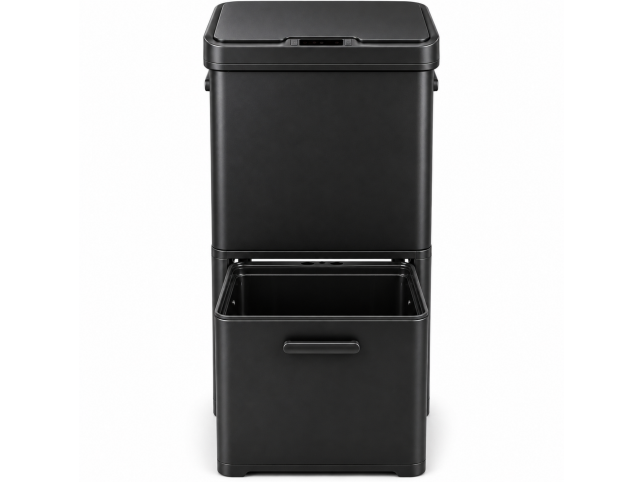
HN-ZN 72L sensor trash can is a good example – it features a double section design, the lower pull-out bin, upper section with a bag retention ring, and a sensor lid. Each of the components should be evaluated with respect to the needs of a certain household.
Start with Local Sorting Practices
In Germany, the eligible containers have to be brought back to the participating retailers to get a refund. The United States state of Oregon has a deposit-refund scheme as well. Eligible containers can be brought back to participating stores and redemption centers. The list of containers and process itself depends on the local legislation. (Guidance from German DPG; Oregon's Bottle Bill.)
While selecting a certain product, the question of keeping these containers separately comes up. Think about the available storage space, opening, and emptying procedures.
Another waste flow is food waste. In Yokohama, Japan, the community project allows people to place food waste in dedicated composting bags and turn it into compost for flower beds. Seoul, South Korea, collects the food waste and processes it at resource recovery facilities into animal feed, compost, or biogas. (Yokohama project description; Seoul's food waste recovery system.)
These are some examples of local practices, and the buyer needs to know about the local collection practices before choosing the bin configuration. Food waste collection and processing also require proper containers and emptying procedure. The waste sorting configuration does not define whether the food waste can be placed there.
Select the Configuration According to the Materials Being Sorted
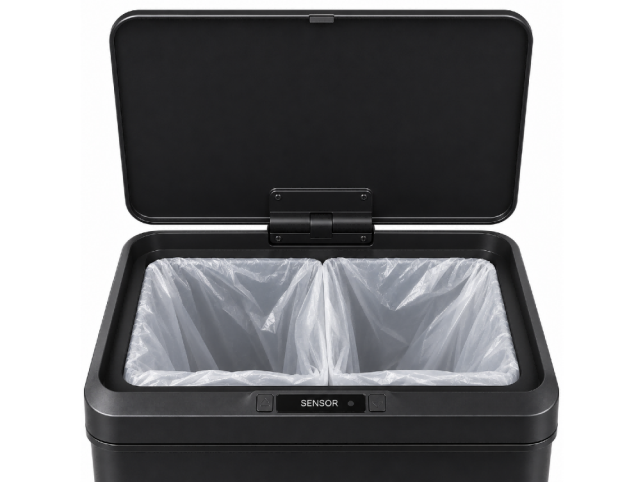
The configuration of the HN-ZN includes two sections – an upper bag compartment and a lower pull-out container; the upper section includes a bag retention ring and can hold one or two bags. Buyer should check the configuration provided and show how bags are installed.
Firstly, buyers should define what materials they have to sort. Secondly, the buyer should estimate whether the upper section, bag retention rings, and the lower container provide adequate access to the required storage place.
A well-designed retail listing should include the images of the upper section with installed bags alongside with the extended lower section. This allows potential buyers to evaluate the configuration and how the sections will be used.
Check the Capacity of Each Section
HN-ZN trash can is listed with the total capacity of 72L. Additionally, buyers should ask for the capacities and usable dimensions of each section, as well as compatible bag sizes. The information about total capacity does not allow concluding about how much space is available in each bag position and in the lower bin.
Households which have to keep the returnable bottles and cans should consider the size of these containers and the interval between return visits when evaluating the trash can. Otherwise, the buyer should think about the amount of waste generated daily and how often he empties this unit.
Buyers should check the opening and storage space. An item may fit inside the bin but not be convenient for inserting or removing. Product pages should feature the information about the confirmed configuration, capacity, and bag size, so potential buyers can evaluate whether this configuration suits their needs.
Think About Disposing and Emptying at Once
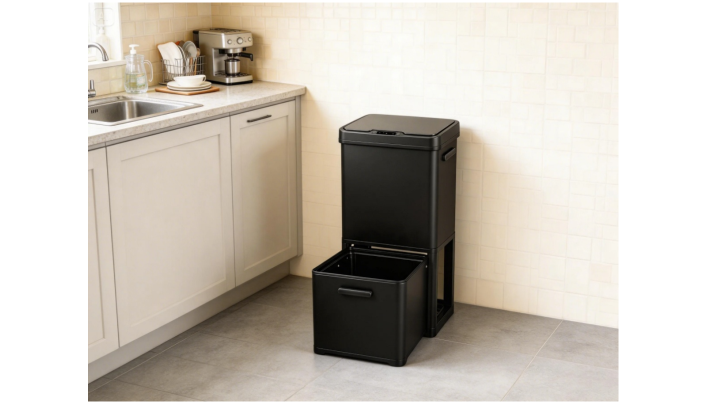
The placement influences disposing and emptying possibilities of the trash can. Buyers should estimate the necessary clearance around the upper lid and the lower container. Furniture should leave enough space for moving the lid up and the lower container for opening it.
Additionally, buyers should receive the instructions about the replacement of bags and cleaning of different components. The information about the care of the electronic lid assembly has to be included.
Retail images can demonstrate the work of the opening mechanism and bag placement, while a quick demonstration can show the access for emptying the container.
A Quick Checklist for Buyers
Before selecting a configuration for your range, make sure of:
· local sorting requirements – what materials have to be sorted and what processes do they require?
· configuration of the sections – how are the upper bags installed and how is the lower container accessible?
· capacities and bag sizes – what are the confirmed capacities of the sections, their dimensions, and what bag sizes are acceptable?
· placement – is there enough room for opening the upper lid and the lower container?
· care instructions – how should users replace bags and clean the different parts?
· listing accuracy – do the photos, specification, and instructions correspond to the selected 72L configuration?
Before placing a bulk order, make sure to read our sensor trash can sample inspection guide.
Frequently Asked Questions
Does the sensor trash can automatically recognize and sort the waste?
The sensor of the HN-ZN 72L triggers the upper lid to open, but the user is responsible for sorting and disposing the material according to local legislation.
Why should I check individual sections and total capacity?
The total capacity is the general storage specification. The size and configuration of each section affect convenience of insertion, storage, and removal of materials. Buyers should evaluate both their household needs and frequency of emptying.
Discuss Your Market Requirements
If you need a sensor trash can for household waste sorting, please tell Hi-na about your target market, sorting arrangement, and order quantity. Contact us for more information about the configuration of the HN-ZN 72L, product specifications, and quotation.


